Loading...
Cold floors, rising heating bills, and pipes at risk of freezing are signs your Huntington basement needs insulation. We fix the problem at the source with the right material for your home.
Basement insulation in Huntington slows heat loss through your foundation walls and floors, keeping your living space warmer in winter and reducing the strain on your heating system - most jobs are completed in one to two days with noticeable comfort improvements in the first cold snap. Contractors typically insulate either the foundation walls or the basement ceiling depending on whether your basement is finished or unfinished and how you use the space.
For homeowners in Huntington, this service matters especially during the city's cold January and February stretches, when an uninsulated basement lets heat drain out from below the living space. Many homes in neighborhoods like Westmoreland and Guyandotte were built decades before modern insulation standards existed, which means the basement is often the last upgrade that happens - and one of the highest-impact ones. If your floors feel cold despite the heat running, the basement is usually the reason.
Many homeowners combine basement insulation with crawl space insulation when their home transitions from a partial basement to a crawl space - treating both areas together is the most effective approach.
If your energy costs jump noticeably during Huntington's coldest months, your basement may be letting heat escape faster than your furnace can replace it. An uninsulated or under-insulated basement is one of the most common causes of high winter heating bills in older homes here.
Walk across your kitchen or living room floor on a cold morning in bare feet. If it feels noticeably cold despite your heat running, the floor is losing warmth to the uninsulated space below. This is especially common in Huntington homes built before the 1970s.
If you see water droplets on basement walls, smell a damp or musty odor, or notice white chalky deposits on foundation walls, moisture is actively working against you. Huntington's humid summers make this a year-round concern. Addressing it before insulating is essential.
If you have had a pipe freeze or burst in your basement, or had to let faucets drip during cold snaps, your basement is not adequately protected from the cold. Huntington does get hard freezes, and proper insulation adds a meaningful buffer between your pipes and outdoor temperatures.
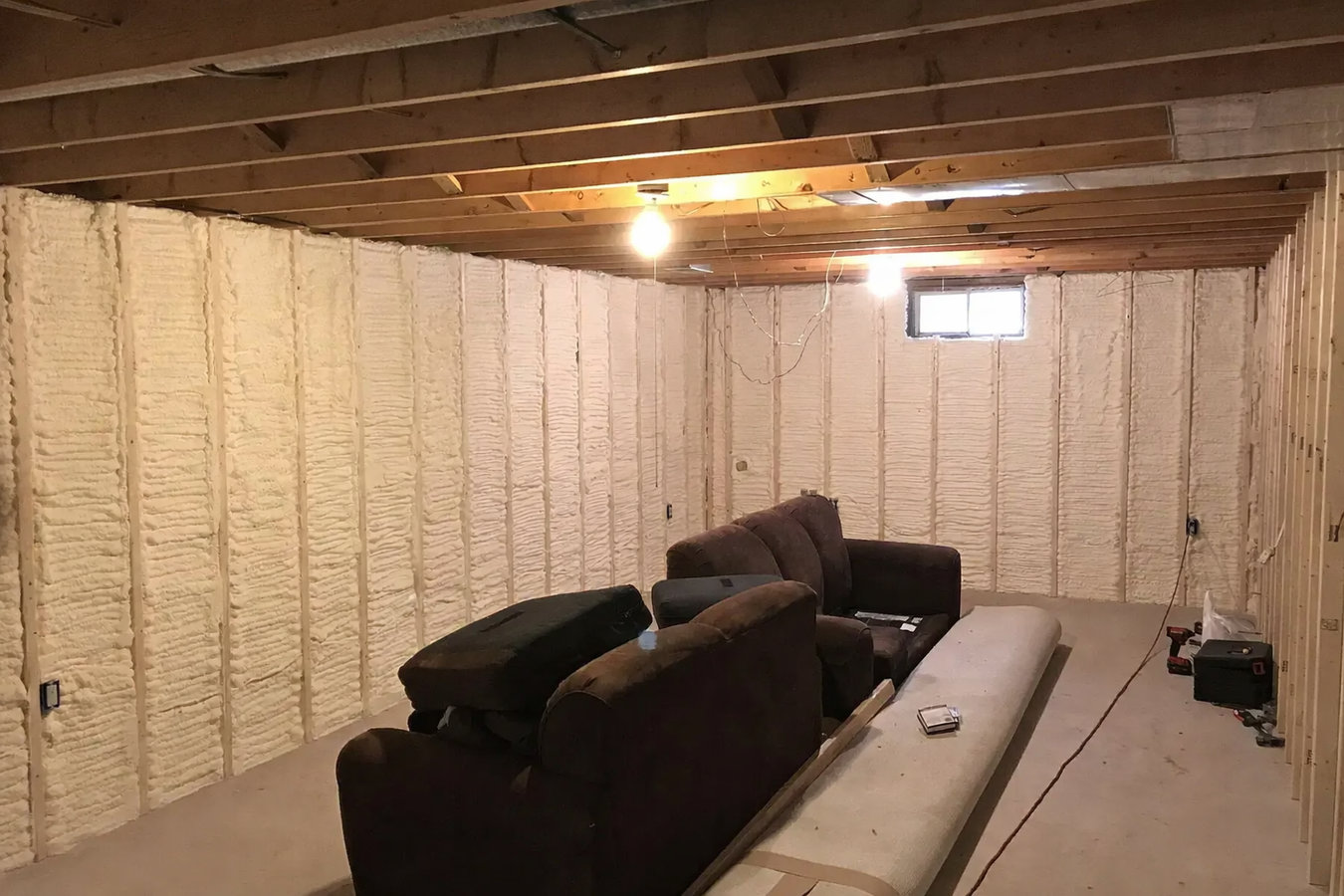
We install spray foam, rigid foam boards, and batt insulation depending on where it is going and what your basement needs. Spray foam is the strongest all-around option for Huntington homes because it seals air leaks and acts as a moisture barrier at the same time - which matters in this climate. For homeowners dealing with both a basement and a crawl space transition, we treat both areas together so one does not undermine the other. Our most targeted job is rim joist sealing, which addresses the band of wood sitting on top of your foundation wall - one of the highest air leakage points in Huntington's older homes - and pairs well with a full closed-cell foam insulation application.
For unfinished basements used as storage or utility space, insulating the ceiling - the floor of the room above - keeps living areas warm without requiring you to heat the basement itself. For finished basements or basements being converted to livable space, wall insulation is the right approach. We also work with homeowners who want to combine basement insulation with crawl space insulation to address the whole below-grade envelope at once. Every job starts with a free in-home assessment so we recommend the right approach for your specific home.
Best for unfinished basements where you want to insulate the perimeter walls and reduce heat loss from the ground up.
Best for unfinished basements used as storage - insulates the floor above to keep living areas warm without heating the basement itself.
Targeted sealing of the wood band above the foundation wall - a primary air and moisture leakage point in nearly all older Huntington homes.
For homes with a partial basement transitioning to a crawl space - both areas treated together so neither undermines the other.
Huntington sits in a humid subtropical climate zone with hot, wet summers and cold, damp winters. That combination puts real pressure on uninsulated basements year-round. In summer, warm moist air enters the basement and condenses on cool walls, contributing to the musty smell and moisture conditions that many Huntington homeowners deal with. In winter, January and February temperatures regularly drop into the 20s, and an uninsulated basement offers very little thermal buffer between your pipes and the outdoor cold. Huntington also sits along the Ohio River in Cabell County, where low-lying areas and sloped lots mean ground moisture migrates toward foundations consistently.
Many homes we work on in Barboursville, WV and Kenova, WV face the same conditions - older homes, damp basements, and heating bills that spike every winter. West Virginia has adopted the International Residential Code, which sets minimum insulation standards for finished basement spaces. You can find relevant code information through the West Virginia State Fire Marshal, which oversees building code enforcement in the state.
We ask a few basic questions - basement size, whether it is finished, any moisture history. We respond to all inquiries within 1 business day and can usually schedule an in-home visit within the week.
We walk through your basement, check the walls and ceiling, look at any crawl space areas, and flag any moisture issues. You get a written estimate before any work is agreed to - no pressure.
We tell you exactly what to move before we arrive. Depending on the method, we seal gaps first and then install the insulation. Most jobs are done in one day - spray foam involves some odor that clears within a few hours.
We walk you through the finished work before we leave. You should see consistent coverage with no obvious gaps. All packaging and debris are removed - your basement looks clean with new insulation in place.
We respond within 1 business day - usually the same day. No obligation, no fee. After you submit the form, someone from our team will call to schedule a free on-site assessment at a time that works for you.
(304) 802-8467Our installers work in Huntington basements and crawl spaces every week and know how moisture moves through Cabell County homes. We hand you a written scope before we ever arrive. That hands-on experience matters when someone is working in your basement.
We work on homes throughout Cabell County and understand the specific challenges of pre-1970s construction - stone foundation walls, original framing that has shifted over decades, and the moisture patterns that come with Huntington's humid climate.
We provide written estimates after an in-home assessment - not a number guessed over the phone. You know exactly what the job includes and what materials we are using before you commit to anything.
Every inquiry - phone, form, or email - gets a response within 1 business day. Most get a same-day response during business hours. You should not have to chase a contractor for a callback.
Every estimate is written, itemized, and based on an actual look at your home, not a number guessed from square footage alone. Our crew has years of hands-on experience with Huntington basements, and we coordinate any permits a job requires before we arrive, so the work is documented from start to finish.
The dense, moisture-resistant foam type most often used in basements and rim joists - learn why it performs better than batts in Huntington's humid climate.
Learn moreIf your basement transitions into a crawl space, both areas need to be addressed together for the insulation work to be effective.
Learn moreSchedule a free basement insulation estimate in Huntington today - Huntington winters do not wait, and most jobs can be completed within the week.